Awardco 2026 State of Recognition

Research, led by organizational psychologist Sarah Marrs, reveals how recognition impacts teams, builds leaders, and drives motivation.
Employee Recognition Software Buyers Guide
Learn how to choose the perfect recognition platform for your team with our comprehensive buyer’s guide.
Employee Recognition Platform
Consolidate all things recognition into one, simple to use platform

Recognition Strategy
Your employee recognition strategy starts here
Recognition & Rewards
Distinguishing the "how" from the "what" in your talent strategy
Employee recognition and employee rewards are closely related, but they serve different purposes within a workplace strategy.
Employee recognition focuses on reinforcing behaviors and values. It acknowledges how people do the work, highlighting effort, collaboration, and alignment with company culture.
Employee rewards focus on outcomes. They provide tangible incentives, such as bonuses, gift cards, or merchandise, based on performance, milestones, or achievements.
The Comparison
Key differences at a glance
The Synergy
Where recognition and rewards overlap
In practice, recognition and rewards are most effective when used together.
For example:
- A peer-to-peer recognition moment may include a small reward
- A milestone celebration may combine public recognition with a tangible gift
- Incentive programs often blend behavioral recognition with performance-based rewards
Research from Awardco's 2026 State of Recognition suggests that rewards are most effective when they add meaning, not just spend.
Gift cards are popular, but employees who preferred personalized gifts, company swag, and team activities were more likely to be engaged. This suggests recognition and rewards work best together.
Strategic Application
When to use recognition vs rewards
Strategic Impact
Why the distinction matters
Organizations that rely only on rewards often see short-term performance gains but miss long-term cultural impact.
Recognition, on the other hand, creates sustained engagement by reinforcing meaningful behaviors over time.
The most effective employee recognition strategies integrate both, using recognition to shape culture and rewards to amplify results.
The Human Impact
How does recognition affect people at work?
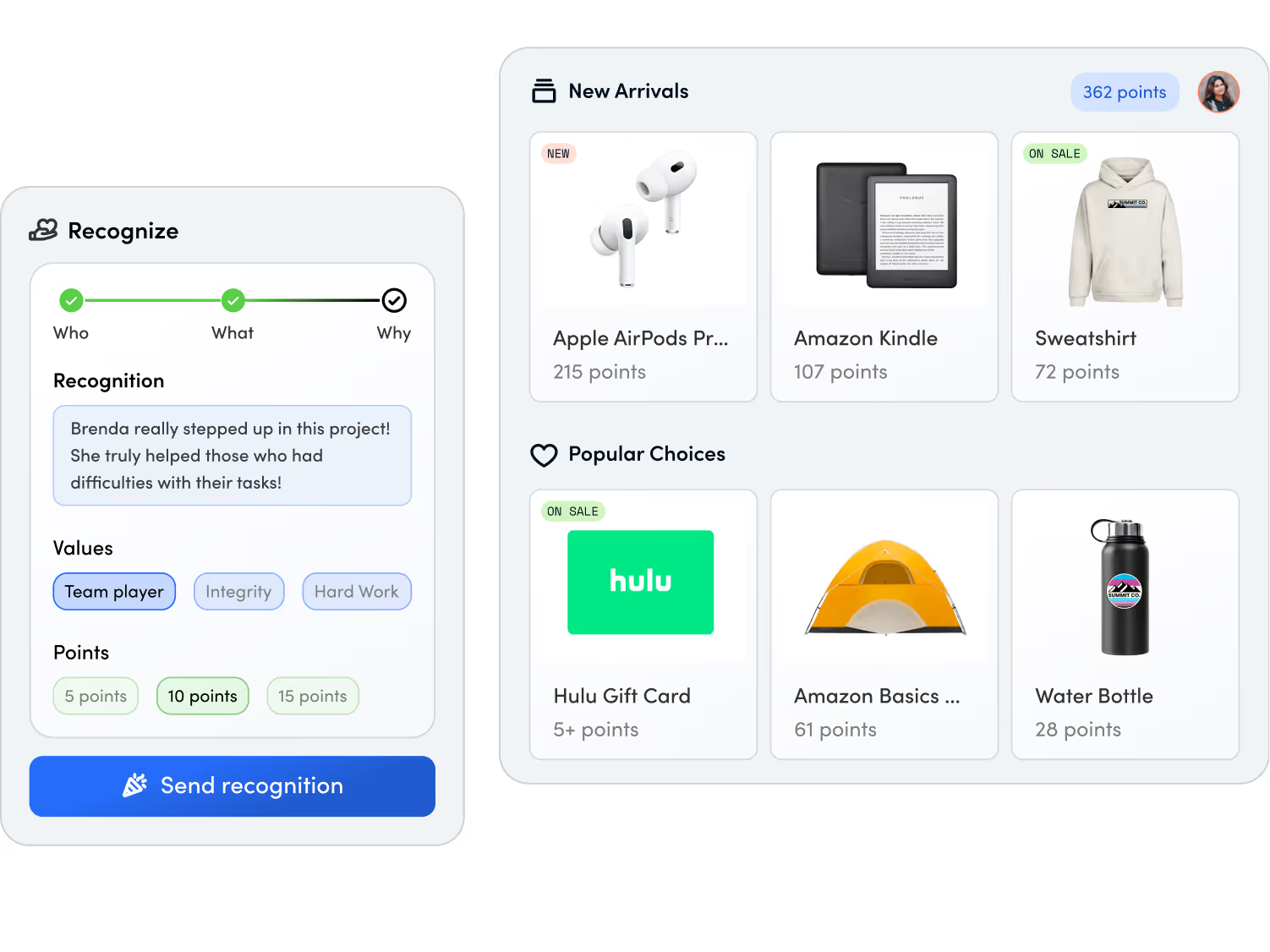
Recognition strengthens connection, confidence, and motivation by affirming that a person’s work matters. In Awardco's State of Recognition report, recognition emerged as one of the most powerful drivers of engagement, inclusion, and well-being. Especially in a workplace increasingly shaped by automation and digital tools.
Recognition can help employees feel:
- Seen
- Valued
- Motivated
- Connected to their team and organization
In a changing world of work, those human outcomes matter more, not less. Recognition is a distinctly human advantage in an increasingly AI-focused workplace.
The Data
What the research says
Recognition does more than make people feel appreciated. It has measurable relationships to engagement, inclusion, well-being, and retention.
In our research, employees who said they had been meaningfully recognized were:
- 2.3x more likely to be engaged
- 1.7x more likely to stay with the company
- 2.1x more likely to feel included at work
- 2.4x more likely to have a high sense of wellbeing at work
Additionally, we surveyed our clients. We compared their engagement data with organizations worldwide. The differences were stark:
- Percent of employees actively demotivated:
- Global: 17%
- With Awardco: 2%
- Percent of employees partially disengaged:
- Global: 14%
- With Awardco: 9%
- Percent of employees who feel engaged
- Global 19%
- With Awardco: 43%
Recognition also remains inconsistent. Only 62% of employees said they had been meaningfully recognized in the last three months, so many organizations still have room to improve.
Recognition in Action
Real-world employee recognition examples
No two employee recognition strategies look exactly alike. The strongest programs fit an organization’s people, culture, and goals, and scale in ways that keep recognition meaningful, visible, and consistent.
These customer stories show how organizations put recognition into practice to strengthen culture, support frontline workers, improve engagement, and drive measurable outcomes.
{{customer-stories-grid}}

The Foundation
Building your recognition strategy from the ground up
If you’re building your recognition strategy from the ground up, where do you start? Or if you’ve already got basic birthday or manager-to-peer programs, how do you build your strategy?
Core Programs
The 6 core types of employee recognition
1. Peer-to-peer recognition
Peer recognition helps scale appreciation beyond managers and can strengthen employee well-being when recognition becomes part of everyday culture.
Awardco’s research also found that peer recognition alone does not have the same universal effect on engagement as manager or senior leader recognition, which makes program design especially important.
Best for:
- Building culture and engagement
- Encouraging collaboration
- Increasing recognition frequency
Because recognition doesn’t rely solely on managers, peer programs help scale appreciation across the organization.
2. Manager-led recognition
Manager recognition plays a critical role in sustaining engagement.
Awardco’s research suggests it should happen at least quarterly, with engagement dropping sharply when employees go longer than three months without it.
Best for:
- Reinforcing expectations and performance
- Supporting career development
- Driving accountability
Manager recognition is often more impactful when paired with regular feedback and coaching.
3. Milestone and years of service awards
Milestones are often underused, despite their outsized impact.
Awardco’s research found that employees who received service anniversary recognition reported a 22-point boost in engagement, while birthday recognition was associated with a 25-point boost.
Best for:
- Reinforcing loyalty and retention
- Creating memorable employee experiences
- Recognizing long-term contributions
Examples include:
- Work anniversaries/years of service awards (1, 3, 5+ years)
- Career milestones
- Personal celebrations
4. Values-based recognition
Values-based recognition connects employee actions directly to company values.
Best for:
- Reinforcing desired behaviors
- Strengthening company culture
- Aligning team members around shared goals
For example, employees may be recognized for demonstrating collaboration, innovation, or customer focus.
5. Incentive-based recognition
Incentives work best when they reinforce outcomes without replacing appreciation.
The strongest strategies combine incentives with recognition so employees feel both rewarded for results and valued for how the work gets done.
This aligns with Awardco’s findings that rewards are most effective when they add meaning and connection.
Best for:
- Driving performance
- Encouraging goal completion
- Supporting initiatives like sales, safety, or wellness
Examples include:
- Sales incentives
- Safety programs
- Wellness challenges
While incentives often include rewards, they are most effective when paired with recognition to reinforce both outcomes and behaviors.
6. Nominations programs
Nominations programs create a structured way to recognize standout contributions through formal awards.
Best for:
- Recognizing exceptional performance
- Highlighting top performers
- Supporting formal awards and leadership visibility
They work best when organizations want recognition to feel more visible, selective, and tied to clear criteria.
Awardco’s research found that company awards, manager emails, and 1:1 conversations had the strongest relationships to engagement and intent to stay, while instant messages like Slack or Teams showed no measurable effect on engagement compared with other methods.
Strategic Balance
How to choose the right mix
Most organizations don’t rely on a single type of recognition. Instead, they combine multiple programs to create a comprehensive strategy.
A balanced approach typically includes:
- Frequent recognition (peer-to-peer)
- Structured recognition (manager-led and milestones)
- Strategic alignment (values-based and incentives)
The goal is to ensure recognition is consistent, visible, and aligned with business outcomes.
Program Optimization
Common gaps in recognition programs
Organizations that struggle with recognition often:
- Rely too heavily on milestone-only programs
- Lack peer-to-peer recognition
- Fail to connect recognition to company values
- Overuse incentives without reinforcing behaviors
Addressing these gaps is critical to building a program that drives both engagement and performance.
Operational Experts
Turning research-backed insights into a scalable system for engagement
Organizations that implement structured recognition programs often see measurable improvements in engagement, retention, and employee satisfaction, especially when recognition is frequent and visible.
Awardco’s research found that recognition frequency was the strongest predictor of engagement in the study, explaining 15% of the variance in engagement scores.
In plain terms: the more consistently employees are recognized, the more engaged they tend to be.
Here’s how experienced operators actually build and scale recognition systems
The Framework
5 critical steps for designing a high-impact recognition system
Step 1: Listen
Survey employees to understand how they currently experience recognition. Identify gaps, inconsistencies, and overlooked groups.
- Where is recognition happening today?
- Who feels excluded?
- What types of recognition are most meaningful?
Insight: Most organizations discover that recognition is inconsistent, infrequent, or limited to specific teams.
- Awardco Engage™ callout
Step 2: Define success
Align your recognition strategy with business outcomes.
Common goals include:
- Improving engagement
- Reducing turnover
- Increasing productivity
- Strengthening culture and values
When defining your strategy, set clear expectations for recognition frequency, not just program types. Research suggests manager recognition should happen at least quarterly to sustain engagement.
Step 3: Gather your champions
Identify influential employees and leaders who believe in recognition.
Use this group to:
- Help design the program
- Promote adoption
- Model recognition behaviors
Peer adoption is one of the strongest drivers of long-term program success.
Step 4: Select your programs
Choose recognition programs that align with your goals, culture, and workforce.
Consider:
- Workforce type (desk vs frontline)
- Company size and geographic distribution
- Frequency of recognition needed
- Budget and reward flexibility
- Integration with existing tools (HRIS, communication platforms)
The right mix of programs should balance consistency, flexibility, and scalability.
Common starting points include:
- Peer-to-peer recognition
- Manager-led recognition
- Milestone and service awards
- Values-based recognition
- Incentive programs
- Nomination programs
At this stage, many organizations begin to see operational challenges, especially as programs expand across teams, locations, or regions.
Step 5: Build your strategy
Design a recognition system that is consistent, inclusive, and scalable.
Key principles:
- Offer flexible reward options so recognition feels meaningful
- Ensure global accessibility across all locations
- Provide equal opportunity for all employees to be recognized
- Enable visibility so recognition is seen and reinforced across the organization
Implementation Hurdles
Common challenges when building a recognition strategy
Even well-designed recognition programs can fail without the right structure. Common challenges include:
- Low adoption from managers or employees
- Inconsistent recognition across departments
- Over-reliance on annual or infrequent recognition
- Lack of visibility into participation and impact
- Programs that feel generic or not meaningful
Addressing these challenges early is critical to building a program that scales successfully.
Successs Indicators
What effective recognition programs have in common
High-performing recognition programs typically share a few key traits:
- Recognition happens frequently, not just annually
- Employees at all levels can give and receive recognition
- Recognition is tied to company values and behaviors
- Programs are visible across the organization
- Leaders actively participate and model recognition
- Recognition happens on a dependable cadence, not just when leaders remember
These characteristics help ensure recognition becomes part of everyday culture, not just a formal process.
the Maturity Model
How recognition programs evolve (and when software becomes critical)
Most organizations move through three stages:
1. Early-stage (manual recognition)
- Informal or manager-led recognition
- Limited consistency
- Minimal tracking or visibility
2. Growing programs (structured but fragmented)
- Multiple recognition programs introduced
- Inconsistent adoption across teams
- Increasing administrative complexity
3. Scaled programs (enterprise-wide recognition systems)
- Recognition embedded into daily workflows
- Consistent participation across locations
- Data-driven insights into engagement and performance
- Recognition frequency, participation, and outcomes are measured over time
At the second stage, many organizations adopt recognition software to reduce complexity and scale programs effectively.
Technology Integration
When do you need employee recognition software?
As recognition programs grow, manual processes often break down.
Awardco’s research found that recognition platforms were used less often, but they still proved effective and can help organizations scale recognition more consistently.
Organizations typically need a dedicated platform when they experience:
- Inconsistent recognition across teams or managers
- Limited visibility into who is being recognized and why
- Difficulty scaling programs across locations or global teams
- Administrative burden managing rewards, budgets, and logistics
- Lack of data to measure impact on engagement or retention
Recognition software helps solve these challenges by:
- Centralizing recognition across the organization
- Automating milestones and program workflows
- Providing analytics and reporting on participation and outcomes
- Enabling global reward fulfillment and choice
The most effective strategies combine strong program design with technology that ensures consistency, visibility, and scale.
Workforce Inclusion
Closing the engagement gap for frontline employees in high-stress environments
A majority of the global workforce does not work at a desk. In retail, healthcare, manufacturing, and logistics, workers often lack steady access to email, intranets, or common digital tools.
Recognition gaps are especially important in high-demand industries. In Awardco’s research, education and healthcare employees reported the lowest levels of meaningful recognition, showing how easily recognition can break down in demanding, distributed, or high-stress environments.
Without intentional design, recognition programs can unintentionally exclude these workers, leading to gaps in engagement, visibility, and morale.
Frontline Engagement
Effective ways to recognize deskless employees
To build an inclusive recognition strategy, organizations need methods that work across all environments.
1. Physical recognition tools
For organizations with deskless or frontline teams, physical recognition tools make recognition immediate and visible during work.
AwardCodes™ combine the immediacy of in-person recognition with the flexibility of digital rewards, bridging the gap between offline environments and modern recognition programs.
This approach helps:
- Deliver recognition in real time, not delayed
- Reach employees who may not use email or desktop tools
- Reinforce appreciation in a more personal, tangible way
Physical recognition methods like this make recognition easy for every employee, no matter where or how they work.
2. Shared visibility through workplace channels
Recognition should be visible across the organization, even for employees without desks.
Examples include:
- Digital signage in breakrooms or common areas
- Team huddles or shift meetings
- Bulletin boards or on-site displays
3. Mobile-first recognition access
Mobile platforms help bridge the gap between deskless and digital environments.
With mobile access, employees can:
- Give and receive recognition from anywhere
- View recognition activity in real time
- Redeem rewards without needing a desktop
INclusive Culture
Build recognition programs that fit every environment
What effective deskless recognition looks like
High-performing organizations ensure that:
- Recognition is accessible regardless of role or location
- Frontline employees can both give and receive recognition
- Recognition is visible within the flow of daily work
- Programs are simple and easy to participate in
Inclusion is critical, recognition programs are only effective when they reach the entire workforce.
Scalability & INclusion
Where technology becomes essential
As organizations scale, supporting deskless workers becomes increasingly complex.
Recognition platforms help by:
- Enabling mobile and offline participation
- Standardizing recognition across locations
- Providing visibility into participation across all employee groups
- Ensuring consistency regardless of role or environment
Recognition is especially valuable where the work is emotionally or operationally demanding. For example, Children’s Nebraska used recognition to raise engagement scores 11.4 points above its industry average and reduce attrition risk by 20%.
Strategic Recap
Summary: Building a scalable recognition strategy
Recognition vs. Rewards
While often used interchangeably, they serve distinct roles. Recognition is a social act that reinforces behaviors and values, while Rewards are tangible incentives that acknowledge specific outcomes and results. A high-performing culture integrates both to drive sustained engagement.
The Psychology of Appreciation
Recognition is a powerful driver of well-being and inclusion. By affirming that an employee’s work matters, organizations create a "Human Advantage" in an automated world. Research shows that meaningful recognition can double engagement levels and significantly reduce turnover.
The 6 Core Recognition Pillars
A comprehensive strategy utilizes multiple modalities:
Peer-to-peer (for frequency)
Manager-led (for performance)
Milestones (for loyalty)
Values-based (for culture)
Incentives (for goals)
Nominations (for high-visibility excellence)
The Impact of Frequency
Consistency is the strongest predictor of engagement. Manager recognition should occur at least quarterly; when employees go longer than three months without meaningful appreciation, engagement scores tend to drop sharply.
Inclusive Strategy for the Frontline
Recognition must be platform-agnostic to reach the 80% of the workforce not at a desk. Utilizing mobile-first tools, physical AwardCodes™, and "Offline-to-Online" triggers ensures that frontline and remote employees remain connected to the organizational culture.
Scalability and Technology
As programs move from manual to enterprise-wide, dedicated software becomes essential. Platforms solve administrative friction by automating milestones, centralizing global fulfillment, and providing data-driven insights into participation and ROI.
Employee Recognition FAQs
FAQs
Answers to the most frequently asked questions about employee recognition
Employee recognition is the structured practice organizations use to recognize employees for their contributions, reinforce desired behaviors, improve engagement, and drive business outcomes.
Common types of employee recognition include:
- Peer-to-peer recognition
- Manager-led recognition
- Milestone and years of service awards
- Values-based recognition
- Incentive-based recognition
At its core, employee recognition is a consistent expression of appreciation that reinforces meaningful work.
Recognition can be:
- Public or private
- Monetary or non-monetary
- Formal or informal
- Frequent or milestone-based
Employees should be recognized frequently, specifically, and close to the moment their contribution happens.
Awardco found that recognition frequency was the strongest predictor of engagement in The 2026 State of Recognition, and manager recognition appears to be most effective when it happens at least quarterly.
Senior leader recognition can also have a strong and lasting effect, even if it happens less often.
Common mistakes include recognizing too infrequently, relying on only one method, overlooking milestone moments, limiting recognition to managers, and failing to connect recognition to company values or business goals.
Awardco’s research also found that common methods are not always the most effective, and that frequency and delivery both influence engagement outcomes.
Cash and gift cards can be effective because they offer flexibility, but they are not always the most meaningful option.
From Awardco’s 2026 State of Recognition, we found that while gift cards were popular, employees who favored personalized gifts, company swag, and team activities were more likely to be engaged—suggesting that memorable and personalized rewards can deepen impact when paired with recognition.
There is no single budget that fits every organization. The right investment depends on workforce size, goals, program maturity, and the mix of monetary and non-monetary recognition used.
A practical starting point is to build a budget model based on your culture goals, participation targets, and reward strategy.
Generally, yes. Cash equivalents (like gift cards or points) are taxable income and low-value “de minimis” items may be exempt.
For full details, read the tax consequences of point-based employee reward programs.
Modern recognition platforms, like Awardco, can automate the reporting process to help simplify reporting and administration for tax withholding and IRS compliance.
For global organizations, Awardco accounts for local tax rules, simplifying compliance across locations.